
HelloFresh: Meal Kit & Recipes
HelloFresh SEFood & Drink
4.513.12K Reviews
- Version
- 26.35
- Installs
- 10.00M
- Age Rating
- Everyone
Screenshots
Our Review of HelloFresh: Meal Kit & Recipes
 Analysis by Appyee
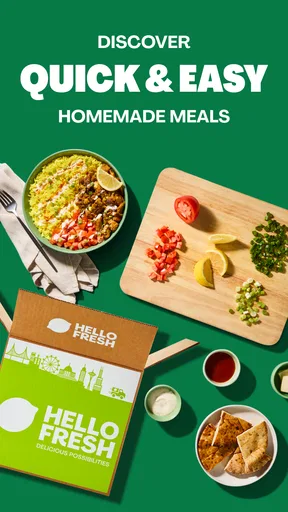
I found HelloFresh: Meal Kit & Recipes most useful when I treated it as the planning center for a delivery-based cooking routine rather than simply another recipe browser. The app sits in the Food & Drink category and is developed by HelloFresh SE. Its main job is to help me browse meal choices, manage a HelloFresh subscription, and keep recipe information close at hand while the box is on its way or sitting in my kitchen.
That distinction matters. If I only want spontaneous recipes from ingredients I already own, a normal recipe app is usually quicker. If I want help deciding what to cook, ordering ingredients, and following a planned set of meals, this app makes more sense. The experience is built around the HelloFresh service, so its usefulness depends partly on whether a meal-kit delivery fits my budget, household, diet, and schedule.
How the app feels to use in everyday cooking
I find the app most useful when I treat meal planning as a small task to finish before the busy part of the day, rather than something to improvise at dinner time. Reviewing a recipe early also gives me room to notice whether its preparation suits my energy and kitchen setup. That habit makes the guided cooking routine feel more manageable, while the next section looks at what still requires care beyond the screen.
Readability and navigation during meal planning
My first impression is that the app is easier to understand when I approach it with a specific task in mind. I can think in terms of “choose upcoming meals,” “check a recipe,” or “manage my delivery,” rather than wandering through it as if it were a general food magazine. That task-based approach keeps the experience practical and reduces the amount of searching I need to do.
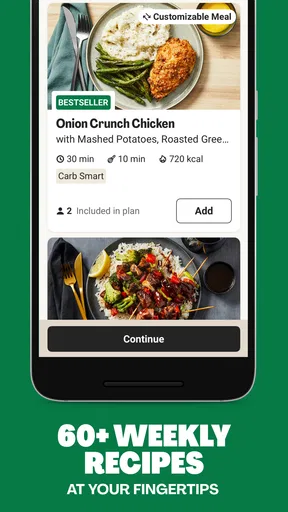
The meal-selection process is particularly important because it is where the app has to turn a large number of possibilities into a manageable decision. I would not rush through that screen. Before confirming anything, I would read the recipe names, inspect the accompanying information, and check whether the meals suit the people who will actually eat them. A colorful food image can make a dish look appealing, but it should not replace checking ingredients and preparation details.
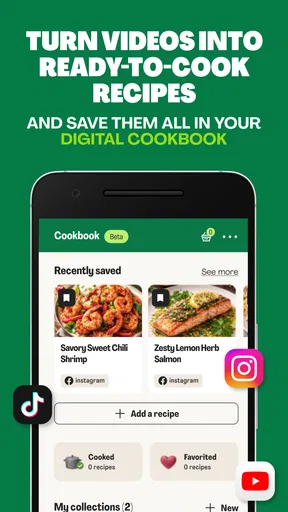
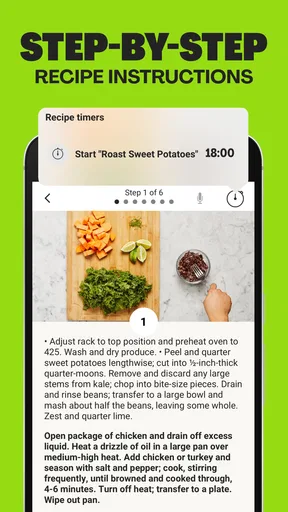
I also like having recipe information available beyond the initial choice. That makes the app more useful after the delivery arrives: I can look up the selected dish instead of searching through messages, printed material, or a separate website. For someone who cooks after work, this small reduction in friction can be more valuable than an impressive collection of extra features.
One practical habit I recommend is reviewing the upcoming menu when I am calm, not when I am already hungry. I can compare meals, notice repeated ingredients, and decide whether the week contains enough variety. This is a better workflow than opening the app minutes before cooking and discovering that a recipe does not match the time or energy I have available.
The app is free to install, but that should not be confused with the overall meal-kit service being free. The download gives me access to the HelloFresh experience; the food delivery itself belongs to a subscription-based shopping decision. I would make that distinction clear to anyone who expects a free recipe library with no related purchase.
Its public reception suggests that many people find the experience worthwhile: it has an average rating of 4.5 from around 207 thousand ratings, with over 10 million installs. Those figures do not tell me whether it will suit my household, but they do indicate that the app is established rather than experimental. It is also marked for Everyone, which makes the intended audience broad, although an age label alone does not guarantee that every screen or cooking task will be comfortable for every person.
Cooking instructions and cognitive load
The strongest accessibility benefit, in my experience, comes from putting the selected recipe and its cooking sequence in one place. A person who finds open-ended cooking stressful may appreciate having a defined path: gather what is needed, complete one stage, then move to the next. That structure can reduce the mental load of deciding what to do with a box of ingredients.
There is a trade-off, though. A guided recipe is not the same as a personalized cooking assistant. I still need to interpret instructions, keep track of several ingredients, judge whether food is ready, and manage hot pans or sharp tools. Someone with memory difficulties may benefit from preparing all ingredients before starting, while someone who is easily distracted may prefer to read the entire recipe first and identify the points where attention is most critical.
I would also avoid assuming that every recipe is equally approachable. A meal with several simultaneous steps can be more demanding than one with a simple sequence. My useful approach is to choose meals based not only on taste but also on the amount of coordination I can realistically handle that day. The app supports choice, but I remain responsible for making a sensible choice.
For families, this can become a shared planning tool. One person can select meals, another can check the ingredients, and a child or less experienced cook can follow a familiar step with supervision. That division of work is more inclusive than leaving one person to remember the menu, shop for everything, and explain the recipe from scratch.
Motor and sensory considerations in the kitchen
The phone is likely to be used in a difficult environment: hands may be wet, the screen may be near flour or sauce, and attention may be split between the display and a hot stove. That is an important limitation of any cooking app. Even a clear interface cannot remove the physical demands of chopping, opening packaging, lifting cookware, or standing for a long period.
I found it more realistic to use the app for preparation and reference than to expect uninterrupted screen interaction while cooking. Before starting, I would read through the recipe, collect ingredients, and position the phone where it can be seen without reaching across the cooking area. If I needed to touch the screen repeatedly with messy hands, the experience would become less comfortable and potentially less safe.
Visual clarity matters here. Food photography can help me recognize a dish, but images are not a substitute for readable instructions. People with low vision, light sensitivity, or difficulty distinguishing colors should judge the app by whether the text and controls are comfortable on their own device, using the phone’s available display settings where helpful. I would not rely on color alone to identify an ingredient or determine whether food is cooked.
Audio can be useful for some people, but I would not assume that every instruction is designed to be followed hands-free. A user with hearing loss may prefer visual information, while a user with limited vision may need a screen reader or magnification. The practical question is whether the phone’s built-in accessibility tools make the recipe content usable in the moment. That can vary with device, operating system, and personal setup.
Motor limitations also change how I would organize the cooking session. I might place ingredients in easy reach, use a stable phone stand, and select recipes with fewer transfers between chopping, frying, and serving. The app can help me choose a meal, but it does not replace adaptive kitchen equipment or assistance from another person when a task is physically unsafe.
Situational access for busy and changing routines
The app is especially relevant to people whose main barrier is planning rather than cooking technique. A busy household can use it to decide meals before the evening rush, while a person living alone can use the recipe schedule to avoid buying a large collection of ingredients for one dish. The benefit is not just convenience; it is the reduction of small decisions that accumulate during a busy week.
A realistic example is a household where one adult arrives home late and another person has limited energy. Earlier in the day, they can review the planned meal together, identify the steps that require the most effort, and decide whether to cook it as written or save it for a better day. The person who is not cooking can read the recipe and organize ingredients, leaving the cook with a clearer, shorter sequence of actions.
Travel, irregular work, illness, and changing family plans are different challenges. A meal-kit schedule is less forgiving when I cannot be home for delivery or suddenly do not want the planned food. The app may help me manage the subscription and upcoming choices, but I still need to check those details early enough for the action to matter. My advice is to treat menu review as a calendar task, not something to postpone until the delivery is imminent.
This is also where the service differs from grocery shopping. With groceries, I can change the quantity of an ingredient, replace a product, or decide at the last minute to cook something else. HelloFresh offers more structure, which can be helpful for routine but restrictive for spontaneous households. If my week changes constantly, I may prefer buying flexible staples and using a recipe app only when I have time.
For people who share a home but have different food preferences, the app can support advance comparison, yet it cannot make every menu suitable for everyone. I would inspect each meal rather than assume that a general family-oriented service will automatically match allergies, intolerances, religious requirements, medical diets, or strong sensory preferences. A person with strict dietary needs should confirm every relevant detail independently before ordering or cooking.
What still creates barriers
The biggest barrier is that the app is tied to a physical delivery service. Someone may find the interface easy but still be unable to use the overall product because of delivery timing, kitchen limitations, cost, storage space, or the need to avoid particular ingredients. This is why I see it as a planning aid for a meal subscription, not as a universally accessible food solution.
There is also a hidden workload in meal kits. The app can organize the menu, but I still have to receive the box, store the ingredients, unpack them, prepare the meal, clean up, and handle leftovers. For a person with limited mobility or fatigue, the difference between “ingredients delivered” and “dinner prepared” is substantial. The service may remove a shopping trip while leaving the most physically demanding parts of cooking in place.
Packaging and ingredient handling can present additional obstacles. Opening packets, reading small labels, separating items, and keeping track of what belongs to which recipe may be difficult for users with reduced grip strength, low vision, or cognitive fatigue. I would sort the delivery in advance and ask for help with any packaging that feels unsafe rather than trying to force it during cooking.
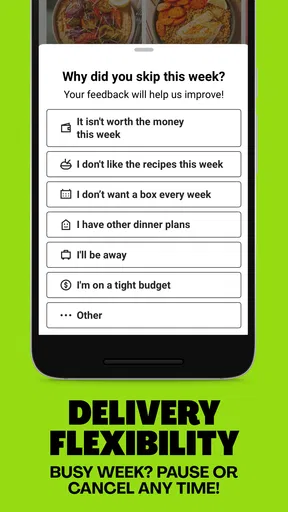
Subscription management deserves attention too. I would not select meals casually or assume that an unused week takes care of itself. The app is most useful when I check the schedule, confirm the household’s plans, and make changes before the relevant deadline shown in the service. Anyone who dislikes recurring commitments should approach the subscription side carefully and use reminders.
Another limitation is that the app cannot judge my kitchen environment. It does not know whether I have enough counter space, whether my oven is reliable, whether I can stand comfortably, or whether another person needs a modified texture. Those decisions remain personal. In an inclusive review, that boundary matters: digital guidance can improve access to information, but it cannot guarantee physical access to the activity itself.
Version, device expectations, and long-term use
The app has been available since January 8, 2016, and the current version is 26.35. It requires at least iOS or Android 10, so I would check the operating system before recommending it to someone using an older phone. A person who depends on a particular accessibility setting should also test the current app on their own device rather than assuming that behavior will be identical across platforms.
Because the app is connected to an active service, its value is ongoing rather than limited to the first installation. I would use it at three points: during menu planning, shortly before the delivery-related deadline, and while preparing the selected recipe. That rhythm keeps the app from becoming another notification source that I open only when something has gone wrong.
For a couple or family, I would agree on who manages the account and who checks the weekly choices. For a person receiving assistance, it may be useful to make the planning process collaborative, with the user retaining control over preferences and the helper handling small administrative tasks. That arrangement can preserve independence without pretending that every part of the service is equally easy for one person.
Who should choose it, and who should look elsewhere
I would recommend HelloFresh: Meal Kit & Recipes to someone who wants a clearer path from meal decision to cooking, enjoys trying planned dishes, and is comfortable with a subscription delivery model. It is a good fit for people who are tired of deciding what to cook but still want to prepare food themselves. It can also help households distribute planning work instead of leaving it to whoever happens to shop.
I would be more cautious for someone with severe allergies, highly specific medical nutrition needs, unpredictable access to a kitchen, or very limited ability to handle preparation tasks. In those situations, a service with more direct dietary control, prepared meals, personal support, or ordinary grocery shopping may be safer and more flexible. The app should not be treated as a replacement for professional dietary guidance or hands-on assistance.
Compared with a free recipe app, this one offers a tighter connection between planning and delivered ingredients, but less freedom to use whatever is already in my pantry. Compared with grocery delivery, it provides more direction about what to cook, but usually gives me less control over individual substitutions and quantities. Compared with ready-made meals, it preserves the activity and satisfaction of cooking, while demanding more time, coordination, and physical effort.
An inclusive verdict after using the whole workflow
My overall view is positive, with an important qualification: the app makes food planning more approachable, not every part of meal preparation accessible. Its clearest strength is the way it gives structure to a recurring routine. I can use it to reduce decision fatigue, prepare for the week, and keep recipe guidance close by when I need it.
The inclusive experience depends on how I use it. Reading the recipe before cooking, choosing meals that match my energy, organizing ingredients, using a stable phone position, and involving another person when necessary all make a meaningful difference. These are not flashy functions, but they are the practical habits that determine whether the app supports a real household.
At no charge to install and carrying an Everyone content rating, it is approachable as a piece of software. Its usefulness still depends on the cost and conditions of the connected meal service, the device I use, and my ability to complete the physical cooking work. I would not recommend it simply because it is popular; I would recommend it when its structured delivery-and-recipe workflow matches the user’s life.
For me, the best reason to keep it installed is that it turns “what are we eating?” into a planned decision with a recipe ready when the time comes. The best reason to skip it is that a subscription meal kit can add obligations where a flexible grocery trip would be easier. If that trade-off suits you, HelloFresh SE has built a useful companion for the full meal-planning routine, and I think it is worth trying with realistic expectations about both digital convenience and kitchen accessibility.
Verdict
Strengths of HelloFresh: Meal Kit & Recipes
- Step-by-step instructions make cooking approachable for beginners.
- Recipe cards clearly show cooking time and required equipment.
- Flexible delivery scheduling helps fit meals around changing routines.
- Portion-controlled ingredients can reduce grocery shopping and food waste.
- The app makes it easy to rate recipes and customize future recommendations.
Limitations of HelloFresh: Meal Kit & Recipes
- Ingredient packaging can create considerable plastic and cardboard waste.
- Some recipes require several pans, bowls, and kitchen utensils.
- Delivery availability and menu options vary by location.
- Skipping or canceling deliveries requires attention to subscription deadlines.
- Meal kits may not be cost-effective compared with buying ingredients in bulk.
Similar Picks in This Category
View All
Rappi: Food Delivery, Grocery
Rappi, Inc - Delivery3.5

McDonald’s: Cupons e Delivery
Arcos Dorados4.3

Swiggy: Food Instamart Dineout
Swiggy4.7

Blinkit: Groceries & more
Blinkit4.8

foodpanda: food & groceries
Foodpanda GmbH a subsidiary of Delivery Hero SE4.0

Zomato: Food Delivery & Dining
Zomato4.7
Frequently Asked Questions
What is HelloFresh: Meal Kit & Recipes, and how does it work?
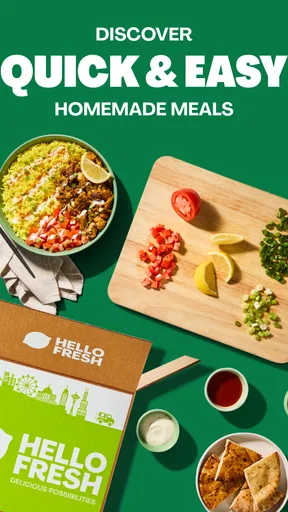
HelloFresh is a meal-kit delivery service that helps you prepare home-cooked meals without planning every recipe or shopping for all the ingredients yourself. Through the app, you can browse weekly recipes, choose meals, manage your delivery preferences, and review upcoming boxes. Selected ingredients and recipe cards are delivered to your address, while you complete the cooking at home.
Can I choose my own meals and customize my HelloFresh box?
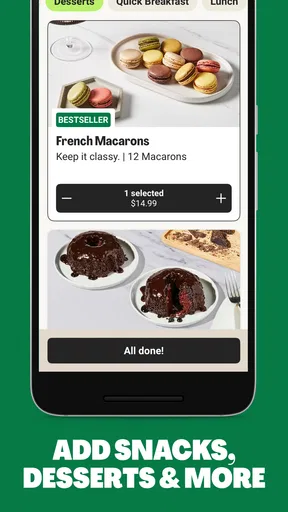
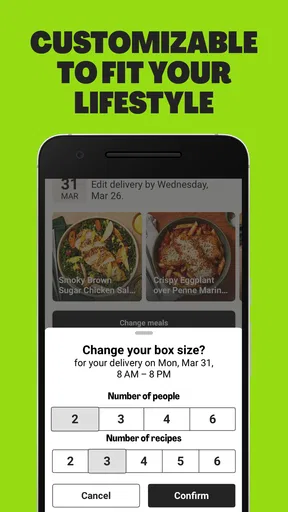
Yes, HelloFresh generally lets you select meals from a rotating weekly menu, although the available choices can depend on your plan, location, dietary preferences, and subscription settings. The app makes it easy to replace suggested recipes, add extra portions or complementary items where available, and adjust preferences before the weekly cutoff. Always check the final order summary before delivery.
Does HelloFresh offer vegetarian, family-friendly, or special dietary recipes?
HelloFresh provides a variety of recipe categories, which may include vegetarian, calorie-conscious, family-friendly, quick-preparation, and other lifestyle-focused options. However, users with severe allergies or strict medical dietary requirements should read every ingredient and allergen note carefully. Meal kits are prepared in facilities that may handle common allergens, so the service may not be suitable for everyone.
Can I skip a delivery or cancel my HelloFresh subscription?
HelloFresh is typically managed as a flexible subscription rather than a one-time purchase. The app usually allows you to skip selected weeks, pause deliveries, change your plan, or cancel the service through account settings. It is important to make changes before the weekly order deadline, because boxes may be charged and prepared after the cutoff and might no longer be refundable.
How much cooking experience do I need to use HelloFresh?
HelloFresh is designed for a wide range of home cooks, including beginners. Recipes normally include step-by-step instructions, ingredient quantities, preparation guidance, and estimated cooking times. Some meals are very simple, while others involve chopping, multiple pans, or longer preparation. Before selecting a recipe, review its difficulty, cooking time, equipment requirements, and allergen information to choose meals that suit your routine.
